Showing posts with label sermon preparation. Show all posts

Tuesday, November 25, 2008

On Sermon Preparation

Some helpful links for preparing an expository sermon (all .mp3 files except the last two links):

Mark Dever on Sermon Preparation (preparing an expositional sermon)

Ligon Duncan on "Principles of Preparation and Normal Practices for Preaching at First Presbyterian Church"

Steve Lawson - 10 How-To’s of Expository Preaching

Hershael York - "A Sermon Preparation Checklist" from 2007 Power in the Pulpit conference

Steve Weaver on preparing expository sermons

Expositional Preaching at 9Marks.org

Tuesday, September 30, 2008

Seminar on Arcing in Minneapolis

If you're in close proximity to Minneapolis you might want to check this out.  (From the Bethlehem Institute website, church-based seminary of Bethlehem Baptist Church, where John Piper preaches.)  I hope they produce video of it for download!

Introduction to Arcing


This seminar will expose participants to a method of Bible study called "arcing." 

October 3-4, 2008 -- Friday evening & all day Saturday
7:00-9:00 PM/Friday and 9:00 AM-4:00 PM/Saturday (1 hour lunch break at Noon)
Seminar Leaders: Tom Steller (Bethlehem's Pastor for Leadership Development and TBI Dean) and Jason Abell (Track 1 Director)

Many people wonder, "How does Pastor John see what he sees in the text of Scripture?" Years ago he learned a method of Bible study called "arcing." Though there is nothing magical about this method, it teaches the motivated student to read Scripture in context, proposition by proposition. It helps the student to discern the biblical author's main point and how every other proposition serves that main point. Through this rigorous attempt to follow the author's thought and discover his intended meaning, the student is confronted by the Word of God with all its truth, beauty, comfort, and challenge.

There's no charge for this seminar.

Advance registrations really help us in our preparations. To register for this seminar, click here.


Related Posts:

Resources for Arcing/Tracing a Passage of Scripture

Tuesday, January 08, 2008

Tuesday Miscellanies - 1/8/2008

My plan this year is to post miscellaneous links and/or resource pages on Tuesdays. Today I have posted two resource pages in addition to the list of miscellaneous links below. The resource pages are on Pro-Life links and Bible overview sermons (highlighting Mark Dever's 69 sermons, covering the whole Bible, the OT, the NT, and each individual book of the 66).

I have recently found the following links to be helpfully thought-provoking and/or spiritually edifying.

Ryan Townsend highlights a resource from Don Whitney to "Consider Your Ways."

Pastor Mike Belcher issues a call for self-examination in his post, "Fig Tree Religion" and suggests starting out the year meditating on Jonathan Edwards' resolutions (Part 1; Part 2).

Jason Button reviews the ESV Literary Study Bible (posted at SharperIron and TheoSource). In addition, he has some links for profitable reading in 2008 and gives biographical posts about Machen and Zwingli.

Timmy Brister has issued the "Join the 2008 Puritan Reading Challenge"

In "Whose Outline?", Mike Osborne provokes preachers to think about how to derive their sermon outlines - and suggests the Scriptures themselves as the best source!

I'm not presently a Southern Baptist, but I found this Statement from Highview Baptist Church intriguing. It gives one Southern Baptist Church's reasons for giving directly to the SBC instead of going through their state convention. Why? To be a better steward by making sure more of their money goes to missions. If they were to funnel it through the state convention, about 64% would not get to their goal.

"Help! Cinematic Counter-Evangelism" by Bob Bixby exposes the folly of Christians placing their hope in Hollywood.

On endorsing political candidates: Nate Busenitz, Bob Bixby, and Ben Wright (here, here, and here) don't think it's a proper activity for a minister of the gospel (I have to agree).

--

Tomorrow: Part 2 of 3 by Dr. Jim Hamilton on "Spiritual Formation and the New Media"

Tuesday, October 30, 2007

Book Review-The Expository Genius of John Calvin

Steven J. Lawson, The Expository Genius of John Calvin. (Orlando, FL: Reformation Trust, 2007), 142pp. reviewed by Doug Smith

Steve Lawson has a goal. He aims “to raise the bar for a new generation of expositors” (xiii). Lawson quotes with approval T. H. L. Parker: “Expository preaching consists in the explanation and application of a passage of Scripture. Without explanation it is not exposition; without application it is not preaching” (p. 79). This book gives us a look at the expository preaching of John Calvin as a model and gold standard for ministry. Calvin was committed to systematic exposition of the Bible, preaching each verse in the text he covered. This book is significant because people need to hear the Word of God taught and applied, not another self-help message or a man’s ideas artificially buttressed by proof-texts. Lawson wants to see a new reformation, and believes that a renewed commitment to biblical preaching is essential for it to happen.

DESCRIPTION

Lawson’s book is simple. This book is almost pocketsize and is an easy read. Eight chapters and 132 pages of prose distill Calvin’s philosophy and practice of preaching, delineating thirty-two distinct characteristics. Two appendices give examples of the textual units Calvin covered and the flow of one of his sermons. After providing the biographical and historical context of Calvin, Lawson proceeds to consider the elements of his preaching. Calvin’s presuppositions, personal devotion to Christ, and homiletical methods are surveyed.

One comes away from this book with a well-developed portrait of Calvin the preacher. Here was a man committed to the absolute supremacy of God’s Word, for himself and his congregation, knowing that “when the Bible speaks, God speaks” (p. 27). Here was a man committed “to behold the majesty of God” in the Word (p. 40) as he sought food for his own soul. Here was a man committed to discovering through diligent study the intended meaning of the text and declaring what it said and required of its hearers. He “made disciplined study a way of life, remaining in his study until the meaning was clear” (p. 41). Here was a man who approached the text with a literal (not literalistic) hermeneutic, rejecting fanciful allegorization. He said, “The true meaning . . . is the natural and obvious meaning” (p. 71). Here was a man who preached through entire books of the Bible, verse-by-verse, not skipping over controversial, difficult, or unpopular material. He viewed the role of the preacher as that of “a dispatched messenger with the divine message” (p. 26), seeing not the preacher, but God’s Word as the final authority. Here was a man committed to prayer and a living orthodoxy, since the “light of truth must yield the warmth of devotion to God” (p. 44). Here was a man committed to a rigorous schedule, often preaching ten times in a two-week period! Although plagued by opposition from enemies and health problems, he preached as often as he could. Even when an invalid, he arrived at church, carried in on a stretcher to preach (p. 48)! While Calvin did take time to visit the sick and give counsel, he saw the pulpit ministry as that which took priority. Here was a man so committed to declaring God’s truth authentically that he left behind manuscripts and notes to speak simply from an open Bible. But this was no off-the-cuff discourse; rather “an entire lifetime of learning stood behind each message” (p. 58). Here was a man who spoke plainly to people in words they could understand, while retaining biblical terminology and avoiding the watering down of truth. Here was a man who did not waste time with trivialities outside the text, but tried to orient his hearers to the text as soon as possible, using his introductions “like a freeway entrance ramp” (p. 54). Here was a man who reasoned persuasively and used vivid imagery to drive home the point. Here was a man who relentlessly pressed upon himself and his hearers the demands of God on their lives.

EVALUATION

Lawson’s book is well researched, well organized, simple, and to the point. He does an excellent job portraying a model of expository preaching. His concise quotations of primary and secondary sources and succinct summaries of the elements of Calvin’s preaching make for a quick read (I read it in one evening; my wife read it over several days, taking a chapter a night), but provide enough depth for further meditation and review.

If the book had any weakness, it might be that it held up Calvin’s example in such a positive light that caveats against a slavish imitation of his habits were lacking. For example, although Calvin, to communicate more simply, used neither manuscript nor notes, it does not follow that contemporary preaching must avoid written aids to be biblical. However, some who read this book might be tempted to avoid the use of aids although their giftedness and personality may be much different from Calvin’s. Lawson points out that Calvin did not use homiletical headings (clearly articulated “points” of a sermon), but this structure may not be something that should necessarily be abandoned, so long as it does not get in the way of communicating the message of the text and is a help to the preacher and hearers in organizing and summarizing biblical truth. Likewise, although Calvin ushered hearers into the text soon with minimal or no extra-biblical material, contemporary audiences may need a bit longer ramp into the text, particularly if they are accustomed to hearing four to eight sermons a month (instead of twenty) at the most. However, the points are well taken that preachers should communicate simply and get people into the text soon, and Lawson does suggest that styles may vary among expositors, so long as they are faithful in discovering and communicating the message of the Bible (p. 84).

Pastors and aspiring pastors ought to read this book. It provides an excellent model for pulpit ministry, giving correction to those who need it and encouragement to those who are faithfully laboring in the Word. The Expository Genius of John Calvin would be a great book to use in mentoring another man in the ministry, as the chapters are ripe with potential for helpful discussion.

Although pastors are the most likely audience for this book, church members would benefit from it as well. Although this book is about Calvin, those who are not from his particular theological tradition will also profit from it, so long as they agree that the urgent need of people is biblical preaching. It is a good book for those looking for a church home or churches looking for a pastor, as it provides an excellent gauge for the type of preaching that most glorifies God and best meets the spiritual need of people.

This book ought to make those of us who have faithful preachers more thankful. It ought to encourage congregations to set men aside full-time to devote themselves to the ministry of the Word and prayer as soon as they can, if they are not already doing so. It should cause us to pray for fruitful study in the pastor’s life that results in fresh application of the truth to the heart of himself and his congregation. And we ought to pray for men training for ministry and those training them. Let us cry out to God, that He would continue to send forth laborers to proclaim His Word with honesty, clarity, and urgency.

CONCLUSION

Steve Lawson has given us a wonderful treasury of wisdom and a model of excellence and faithfulness in this book. I was convicted, encouraged, and had my appetite whetted for more. (He plans further books in this series, including Martin Luther, George Whitefield, Jonathan Edwards, and Charles Spurgeon). There is nothing Christians need more than to understand and obey God’s Word, and nothing preachers need to be more devoted to than understanding, obeying, and declaring the whole counsel of God through systematic expository preaching.

Lawson’s goal is worthy, and this book certainly does “raise the bar” by holding forth Calvin as a model. But the standard required is no less than what God expects of his ministers: “preach the Word” (2 Tim. 4:2). May He raise up men devoted to this task and congregations that will encourage and grow from it, to the praise of His glory.

Saturday, June 23, 2007

19th Century Thoughts on Pulpit Plagiarism: a Fatal Crutch

In my reading of Baptists and the Bible by L. Russ Bush and Tom J. Nettles, I came across this quote on page 142:
A strong temptation frequently assails a man, when preparing a sermon, to look around for helps. He can easily find a book of skeletons made to his hand, and it seems to him very convenient to make use of it. Let me urge every brother, as he values his self-respect, his honesty, his ministerial usefulness, as he values his own soul and the souls of others, to resist this temptation at the outset. If he have any of these crutches, let him commit them at once to the flames, or he will never learn to walk. The habit is absolutely fatal.
(from page 283 of Notes on the Principles and Practices of Baptist Churches, 1857 by Francis Wayland, influential Baptist leader in America)

Tuesday, June 19, 2007

Who's Robbing Whom? Some Thoughts on Pulpit Plagiarism

Is it wrong to preach another pastor's sermon? This issue is certainly not new, but there has been a good bit of discussion in the last few months concerning possible answers to this question, some of which is quite disturbing.

Some prominent pastors, such as Rick Warren and James Merritt, openly encourage other pastors to take their sermons and preach them – even without giving proper credit. However, others disagree. On December 7, 2006, the Albert Mohler Program featured a radio interview between Dr. Mohler, president of the Southern Baptist Theological Seminary (SBTS), and Hershael York, a pastor as well as a professor of preaching at SBTS. They are in agreement about this issue, and the title of the program reveals their perspective: "Plagiarism in the Pulpit: Stealing the Material We Preach." They believe a pastor should actually take the time to study and prepare messages suited for his own congregation instead of using something prepackaged and pre-processed. Shocking, isn't it?

I regularly preach in a supply capacity, filling in for pastors or serving churches that do not have a pastor. I also work a full-time job. Study time is a premium amidst family and work responsibilities. It could become a temptation to steal others' sermons.

However, I believe Mohler and York are exactly right concerning this issue. I have been thinking about pulpit plagiarism a fair amount of time lately, and would like to share the following thoughts on the subject. My thoughts are in general terms. I realize there are variations on pulpit plagiarism, ranging from preaching another's sermon verbatim to extensively modifying it. One problem is that credit is often not given where credit is due. Another problem is that people are cheated by this thievery that is being promoted today. And the interesting thing is that the people who suffer the most are not the people whose material is being used, but the people who are stealing it and the people who are having it fed to them. Pulpit plagiarism robs pastors and congregations in at least five ways.

  1. Pulpit plagiarism robs pastors and congregations of spiritual nourishment they can only get from someone who lives among them and labors in the text of Scripture.

The pastor who is content to steal others' sermons robs himself of the valuable discipline of study and its benefits for himself. He has less reason to devote hours throughout the week to the Word than he would if he were preparing the sermon himself. The plagiarizer deprives himself of a great blessing that God would freely give to him and the congregation if he would devote himself to the Word.

The congregation also gets the short end of the stick. Just as the milk from a mother's breast contains nutrients suited for a child that even the best formula cannot replace, a pastor who studies the Word and knows his congregation will be able to feed Christ's sheep with a diet suited to their needs better than any prepackaged sermon can. Phillips Brooks said that a true preacher is one who utters "truth through his own personality," and this is what every congregation needs. There are particular applications of the text that may be irrelevant to a congregation if taken from a canned sermon, and there are particular applications they need that cannot be gained except from their own pastor's labors in the Word. This is especially true in foreign countries where the people may have no clue as to the point of illustrations in America and have certain needs that preachers from other cultures might not touch upon.

  1. Pulpit plagiarism robs pastors and congregations by discouraging consecutive exposition.

A pastor said to me that the best way to feed Christ's sheep is through expounding the Scripture book by book. I believe this is so because it enables you to preach passages with the big picture of its context in mind. When done correctly, expositional preaching lets God set the agenda and makes His Word the authority, rather than the preacher. There are variations on this method. Some, like John MacArthur, have preached dozens of sermons from one Bible book; others, like Mark Dever, preach overview sermons (covering an entire book in one sermon) in addition to covering smaller units of Scripture. Faithful expositors, no matter how large a preaching unit they use, agree with what Dever has said: "An expositional sermon is one in which the point of the passage is the point of the message." And the best way to be able to ensure that you are preaching the point of the passage in each message is to preach consecutively through a book of the Bible.

A plagiarizing pastor may preach expositionally if he steals material from Dever, MacArthur, John Piper or someone else who preaches through books. But I would imagine the tendency for many would be to preach whatever sermon strikes them for the week or whatever the latest topical offering is from the mailing list they are on or the magazine to which they subscribe.

  1. Pulpit plagiarism robs pastors and congregations by encouraging laziness.

A pastor is called to be diligent (2 Timothy 2:15). He is called to take time to think in order to gain understanding: "Consider what I say; and the Lord give thee understanding in all things" (2 Timothy 2:7). He must get the knowledge he needs and take time to process that knowledge through meditation and research and study. He must pray and labor. Preaching another man's sermon requires none of this. One could certainly modify it, but the temptation to carry over as much as possible to prevent as much work as possible will be there.

  1. Pulpit plagiarism robs pastors and congregations of a safeguard against false teaching.

If a pastor is too lazy to study for his own sermons, he will probably be too lazy to check out the exegesis and applications of another's sermon to make sure that it is legitimate. He may begin teaching all sorts of false doctrine without even realizing that he is promoting unbiblical ideas. How can he guard the flock if he only takes for granted that he is feeding them healthy food?

  1. Pulpit plagiarism robs pastors and congregations by rendering thieving preachers obsolete.

If a pastor simply preaches a sermon from another preacher, why couldn't someone else from the congregation preach? Why not simply have the person with the most pleasant voice preach? Why not have the person majoring in drama preach a stolen sermon? Better yet, why not show a video every week of a favorite celebrity preacher?

If a pastor simply steals sermons from someone else, why go through all the trouble? Why not fire the pastor or free him up to do the other things he needs to do and let someone else preach a canned sermon or show a video?

On page 226 of his book, Walking with the Giants, Warren Wiersbe gives a relevant warning (emphasis mine):

Two dangers we must avoid as we read the sermonic literature of the past: imitation and plagiarism. Imitation robs me of my individuality, and plagiarism robs me of my character; both are insidious. One young preacher was so taken with the sermons in a certain book that he decided to preach them as a series. What he did not know was that one of his members owned the same book and had read it. As the member left the service one Sunday, he said to his pastor, "That was a fine sermon this morning!" Then he added with a smile, "Next week's is good, too!" The problem, of course, lies not with the character of the printed sermon but with the character of the preacher reading it. Blackwood was rather blunt in his counsel: "If one is tempted to steal the fruits of other men's labors, one ought to let such books severely alone. . . "

Francis Bacon, in one of his essays, compared students to spiders, ants, and bees, and we may justly apply the illustration to preachers. Some preachers never study but, like the spider, spin everything out from within, beautiful webs that never last. Some are like ants that steal whatever they find, store it away, and use it later. But the bee sets the example for us all: he takes from many flowers, but he makes his own honey.

So, let us neither spin sermons without study, nor be thieves like the ant. Let us be like the bee. As we benefit from a multitude of sources, we must make the final product our own. We need to be, as one professor has said, those who milk many cows but make our own butter. Let's learn from many sources; let's assimilate what we have learned and produce our own sermons. If we fail to churn our own butter and merely lift our messages from other men, we do not merely rob them (even if they say it is okay), but we rob ourselves and the people of God of a rich spiritual feast.

Friday, January 12, 2007

Weekender articles at Sharper Iron
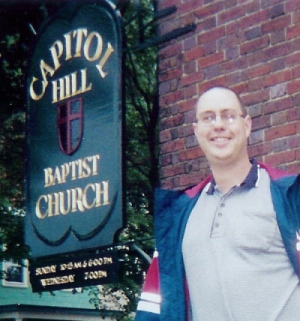
"Mr. Smith Goes to Washington" is a two-part article about my trip to the Weekender at Capitol Hill Baptist Church in Washington, D.C., in September of 2006.

Part 1 is here: http://www.sharperiron.org/2007/01/11/mr-smith-goes-to-washington-part-1/

Part 2 is here:
(Ben Wright interacts a bit with the article here, particularly concerning fundamentalism: http://paleoevangelical.blogspot.com/2007/01/out-fundamentalling-fundamentalists.html )